
Case study · PrepMind
Restaurants, production, and cash flow in one system.
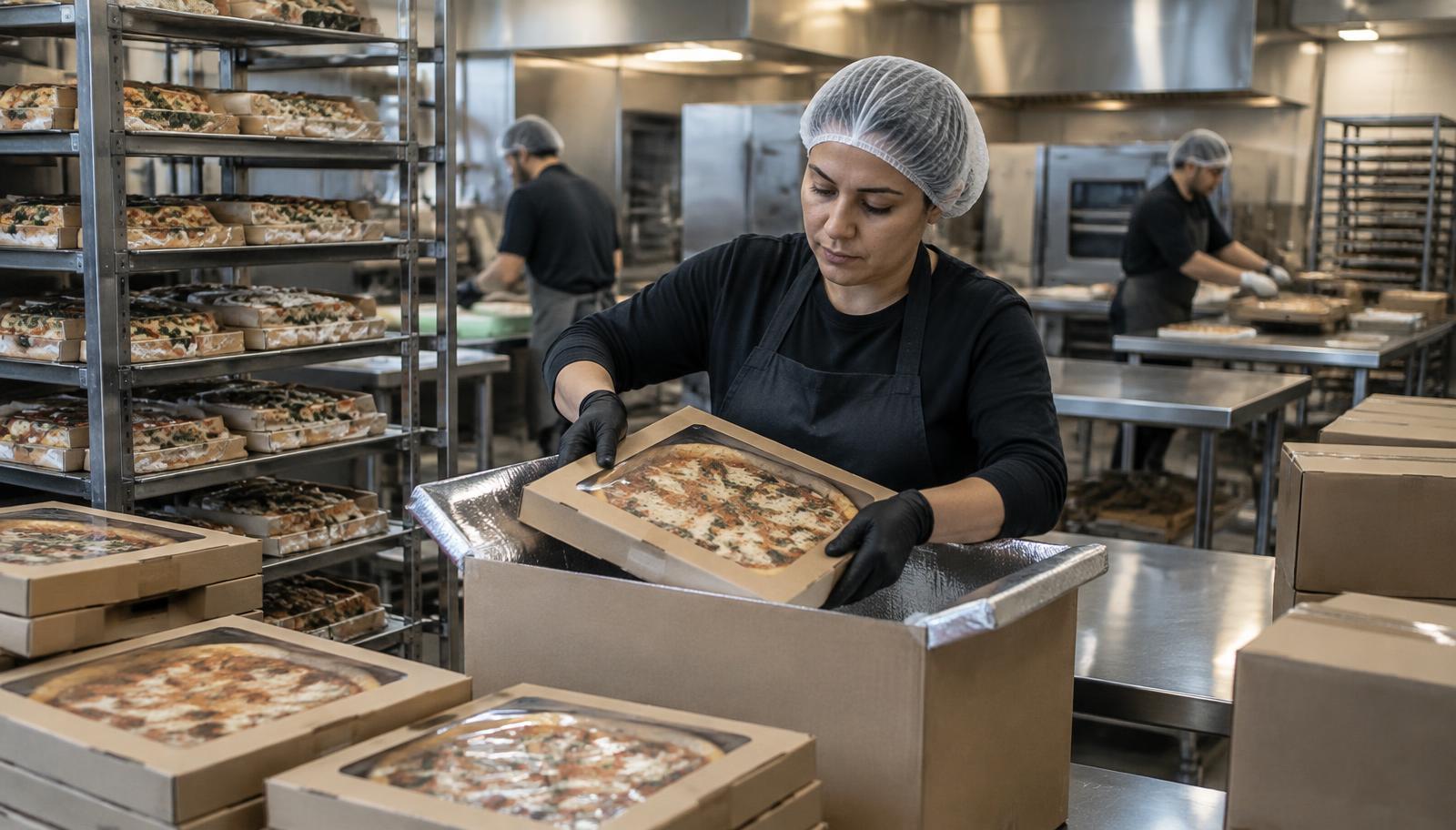
PrepMind runs restaurants alongside a commissary supplying frozen pizzas and other products to retail and wholesale customers. We built one tailored operating platform that links orders, production, inventory, staffing, purchasing, and financial reporting across every location.
Two businesses, one set of numbers.
A restaurant group and a commissary sit under the same roof but run on different logic. Restaurants plan staffing around sales. Production plans labor around output. And a wholesale order that ships today isn't cash today.
The information lived in pieces — sales systems, supplier invoices, employee schedules, purchase orders, transfers between locations. That made it hard to see how daily operations affected profitability or available cash, which is the question an owner actually needs answered.
PrepMind brings those workflows into one platform, so the floor and the finance sheet finally read the same numbers.
What we built.
Six connected systems — ordering, production, inventory, staffing, purchasing, and financial reporting.
01
One platform for two business models
A restaurant and a commissary don't run the same way.
- Restaurant locations compare staffing against sales. Production locations compare scheduled labor against units produced. The system reflects how each operation actually works instead of forcing both onto one generic dashboard.
- The same workspace still rolls both up into one view, so an owner can move from a single shift to the whole business without switching tools.
- Because the two models are modelled separately, a change to one doesn't distort the numbers on the other.
02
Profitability grounded in actual costs
P&L built from what was really spent, not what was projected.
- Reporting brings together sales, purchases from supplier invoices, labor including payroll burden, recurring expenses, and internal transfer costs.
- Actual purchases are kept separate from estimates, so a missing invoice or an unusual expense shows up as something to look into rather than blending quietly into the total.
- Internal transfers carry a cost, so moving product between locations reads correctly instead of disappearing into a margin nobody can explain.
03
Cash flow that separates sales from collections
Revenue that ships isn't cash that arrives.
- Weekly planning distinguishes restaurant sales from wholesale customer payments — frozen-pizza receipts can be entered customer by customer rather than as one undifferentiated number.
- Vendor payments, biweekly payroll, rent, and other scheduled costs sit alongside them, with opening cash and projected amounts adjustable.
- The result is a weekly view of what the business will actually have on hand, not just what it booked.
04
AI-assisted order intake
Orders arrive by email and EDI. They shouldn't need retyping.
- Order-parsing tools turn emailed and pasted orders into structured product lines.
- Retail purchase orders can also be processed through EDI workflows, cutting the re-entry that used to sit between an order and a pick list.
- Nothing is automatic where it shouldn't be — product, customer, and quantity matches are reviewed before an order becomes real.
05
Connected production and traceability
From prep task to shipped pallet, with a record at each step.
- Prep tasks, employee assignments, PIN-based task clocks, lot-number capture, shipping, and inventory transfers all connect production activity to fulfillment.
- Because the steps are linked, cost tracking follows the product instead of being reconstructed after the fact.
- Lot capture means a quality question or a recall has an answer that doesn't start with a phone call to the kitchen.
06
Staffing insight, and workforce data you own
Hours are the least interesting number on a schedule.
- Weekly schedules show labor dollars and percentages including payroll burden, with front-of-house and back-of-house breakdowns for restaurants and prior-year comparisons behind them.
- Internal scheduling and PIN-based clocking support the transition away from an external service, so workforce data stays inside the operation rather than living solely with a vendor.
- Location assignments and role-based permissions control what staff can see, with sensitive financial views reserved for master administrators.
The connection is the differentiator.
Plenty of tools track one of these things well. The difference here is that a customer order, a production task, an employee punch, a supplier purchase, and an internal transfer all contribute to one view of the business — so operations and finance stop reconciling two different stories at month end.
What it provides is a shared workspace for running the day and reviewing profitability and projected cash needs. And it makes the case that a tailored platform can hold restaurant service and wholesale production without forcing both into the same workflow.
Running more than one business on one spreadsheet?
Tell us how your operations actually work. We'll tell you honestly whether a tailored platform is the right answer.